01 — RESCUE
Reach difficult places
Explore teleoperated platforms for disaster assessment, search and rescue, and safer access to hazardous environments.
A proposed locally maintainable robotics programme to help trained responders reach difficult environments, improve situational awareness and support people during emergencies.
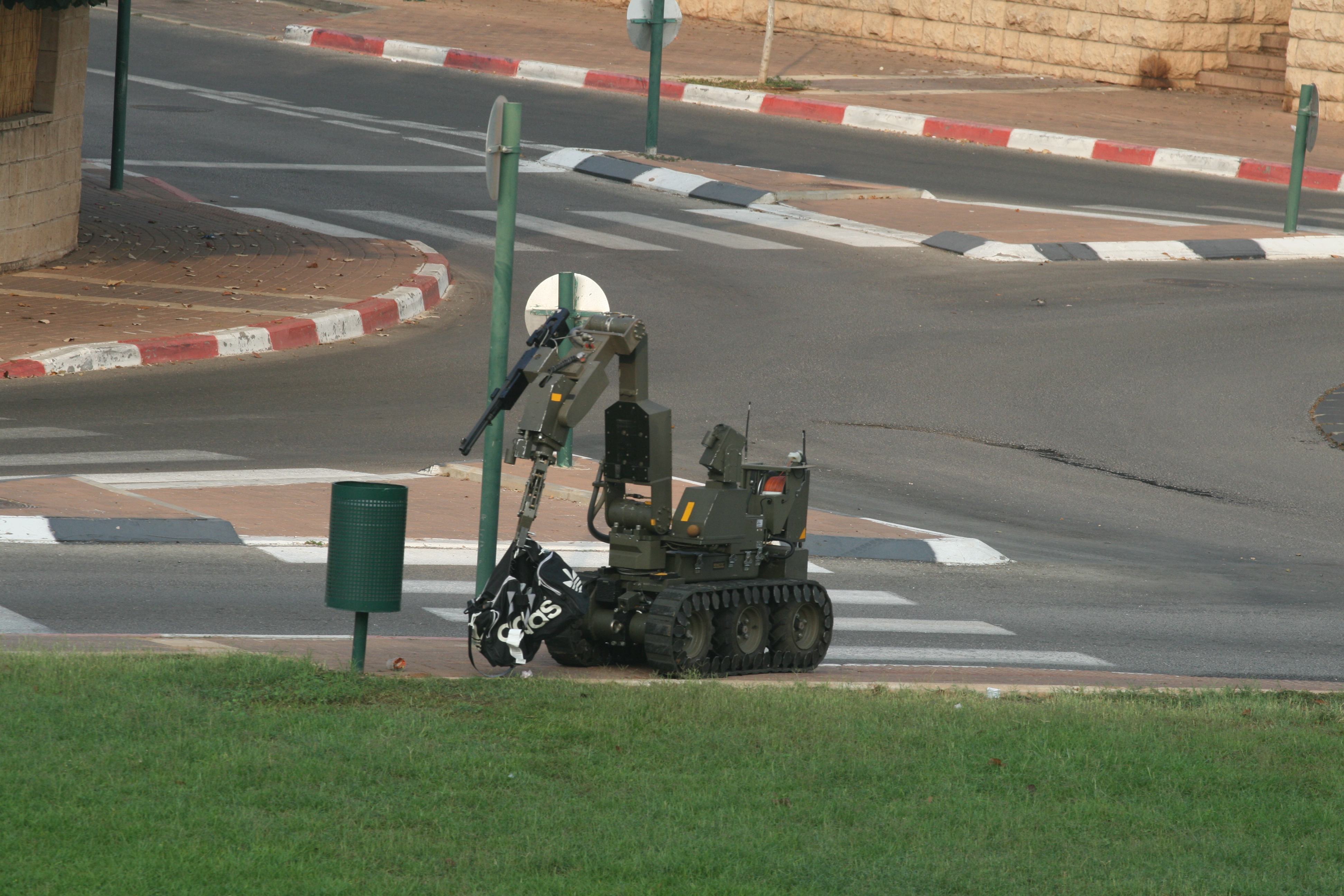
These are photographs of existing equipment operated elsewhere. They are reference examples only—not THETHA hardware, a local deployment, or an endorsement.

The programme focuses on assistance, rescue and accountable information support. Human responders remain responsible for decisions that affect people.
Explore teleoperated platforms for disaster assessment, search and rescue, and safer access to hazardous environments.
Evaluate camera, lighting and thermal sensors to help trained teams understand environmental conditions.
Organize authorized incident notes and evidence records with clear provenance and human review.
Each capability remains a proposed research area until independently tested, approved and supported by documented evidence.
Assess heat-sensing for low-visibility rescue and hazard awareness. Thermal readings are not proof of identity or wrongdoing.
Explore victim-centred rescue support, discreet help requests, interpreter access and secure referrals led by specialist responders.
Evaluate human-reviewed transcription, translation and incident timelines. Original evidence remains authoritative.
Research sensor alerts that may assist a specific lawful inspection by trained personnel. An alert is never proof.
Explore remote observation in fire, flood, storm and structural-collapse scenarios before responders enter.
Prioritize operator control, clear status, safe-stop behavior, secure communications and documented mission boundaries.
Robotics can support responders; it must not become an automated enforcement authority. Safety, privacy and public accountability are design requirements.
No autonomous pursuit, apprehension, restraint, coercive crowd control or physical intervention.
No weapons, electrified nets, projectiles or payloads intended to shock, entangle or incapacitate people.
No facial recognition, voiceprint identification, immigration-status profiling or AI criminality scoring.
Audio capture off by default; lawful purpose, restricted access, original evidence preservation and human review.
Requirements, stakeholder input, legal review and hazard register.
Architecture, feasibility work and non-operational proof of concept.
Controlled trials, cybersecurity, safety and corrective actions.
Only then consider a limited, supervised and approved pilot.